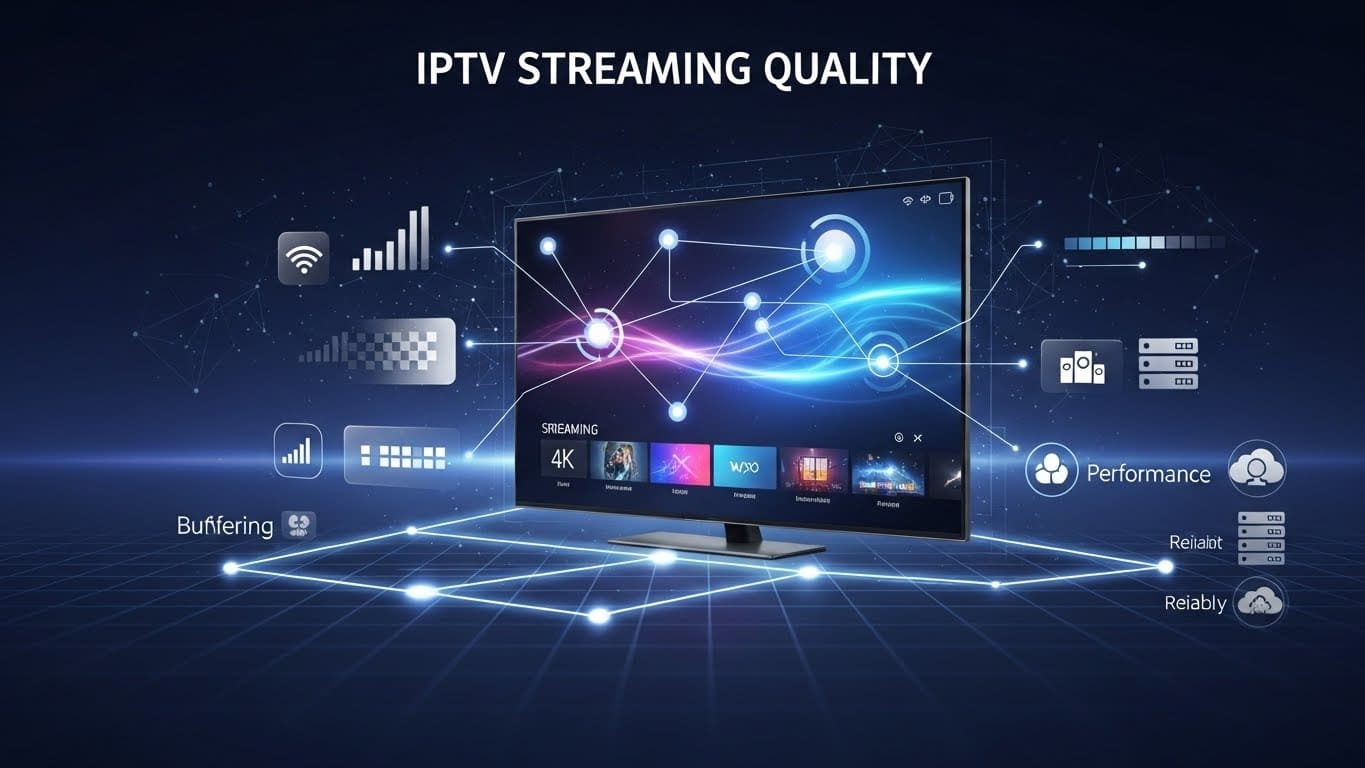
IPTV Streaming Quality: Performance & Stability Explained
The quality of IPTV streaming is key for a smooth viewing experience. With more people watching internet TV, knowing what affects IPTV quality is important.
A top IPTV service offers clear video and sound, little buffering, and steady connection. But, several things can change the quality. These include internet speed, server quality, and what your device can do.
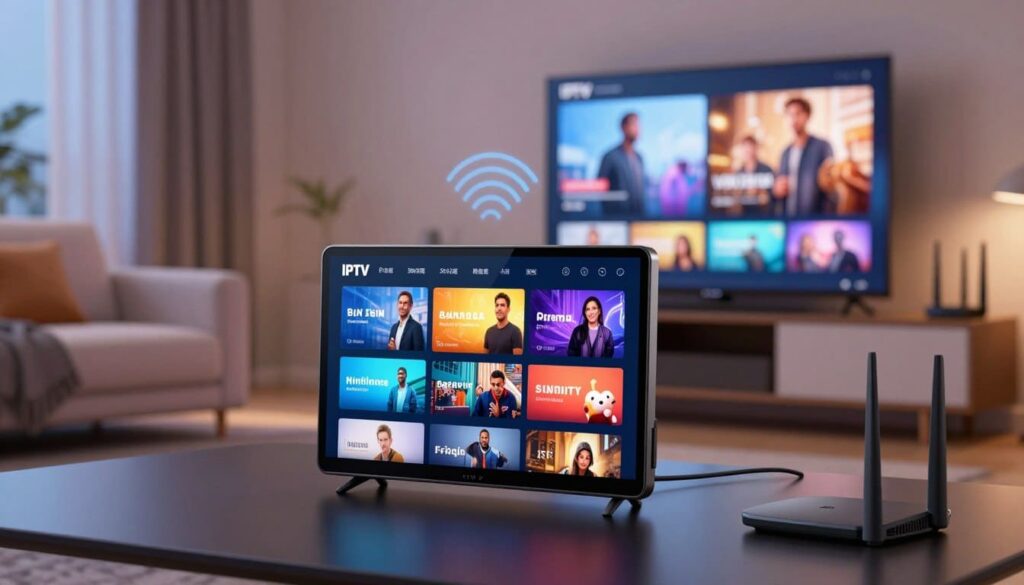
As IPTV gets more popular, knowing what affects its quality is critical. By understanding these factors, viewers can make their experience better. They can enjoy a more stable and high-quality service.
Key Takeaways
- IPTV streaming quality is affected by multiple factors, including internet speed and server quality.
- A good IPTV service provides high-quality video and minimal buffering.
- Understanding these factors is critical for improving the viewing experience.
- Device capabilities also play a significant role in IPTV streaming quality.
- Reliable connectivity is essential for a stable IPTV service.
Understanding IPTV Streaming Quality
To understand IPTV streaming quality, we need to look at the technical parts that affect it. The quality of IPTV streaming is key to a good viewing experience. It decides how clear and smooth the content is on your device.
What Defines Good IPTV Streaming Quality
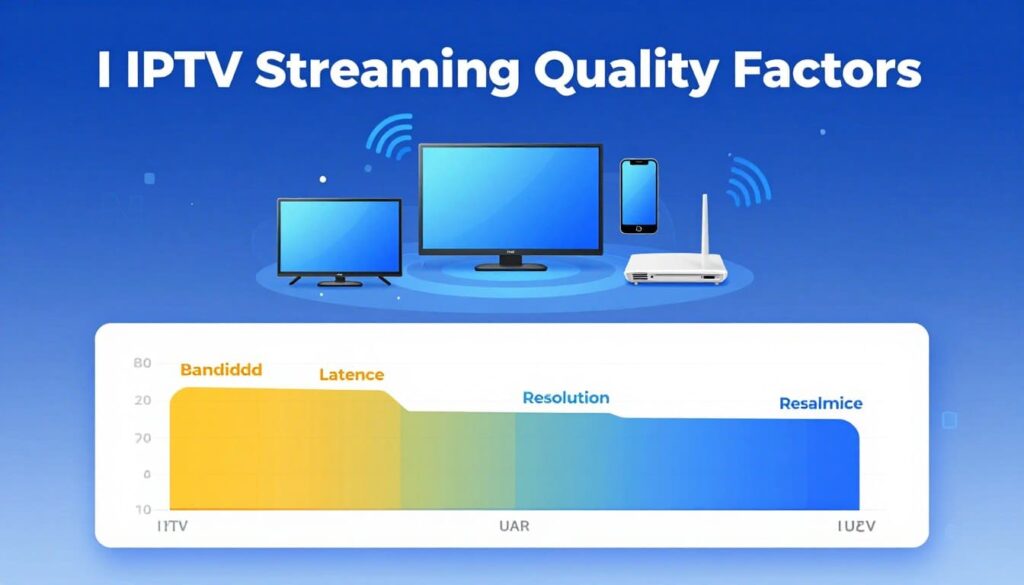
Good IPTV streaming quality has a few important parts. These include high video resolution, low latency, and stable data transmission.
The video resolution, in pixels, affects how clear the image is. Common resolutions are 720p, 1080p, and 4K, with higher ones showing more detail.
The bitrate, or the data sent per second, is also key. A higher bitrate means a better stream, with more detailed video and audio. But, it needs a fast and stable internet connection.
Why Quality Matters for Your Viewing Experience
The quality of IPTV streaming greatly affects how you watch content. High-quality streaming means you can enjoy your shows without any problems. This is very important for live events, where real-time transmission is essential.
| Quality Factor | Description | Impact on Viewing Experience |
|---|---|---|
| Video Resolution | Measured in pixels (e.g., 720p, 1080p, 4K) | Affects image clarity and detail |
| Bitrate | Amount of data transmitted per second | Influences overall stream quality and smoothness |
| Latency | Delay between content transmission and reception | Impacts real-time viewing and interactivity |
Understanding these factors helps both viewers and providers improve IPTV streaming. It’s not just about choosing the right settings. It’s also about having a strong and reliable infrastructure to support the stream.
The Science Behind IPTV Streaming
IPTV streaming is based on science and technology. It uses data transmission, video compression, and network stability. These elements work together to bring high-quality video to viewers.
IPTV streaming sends video data over the internet. This is done through data transmission protocols. These protocols make sure the content is delivered efficiently and reliably.
How IPTV Data Transmission Works
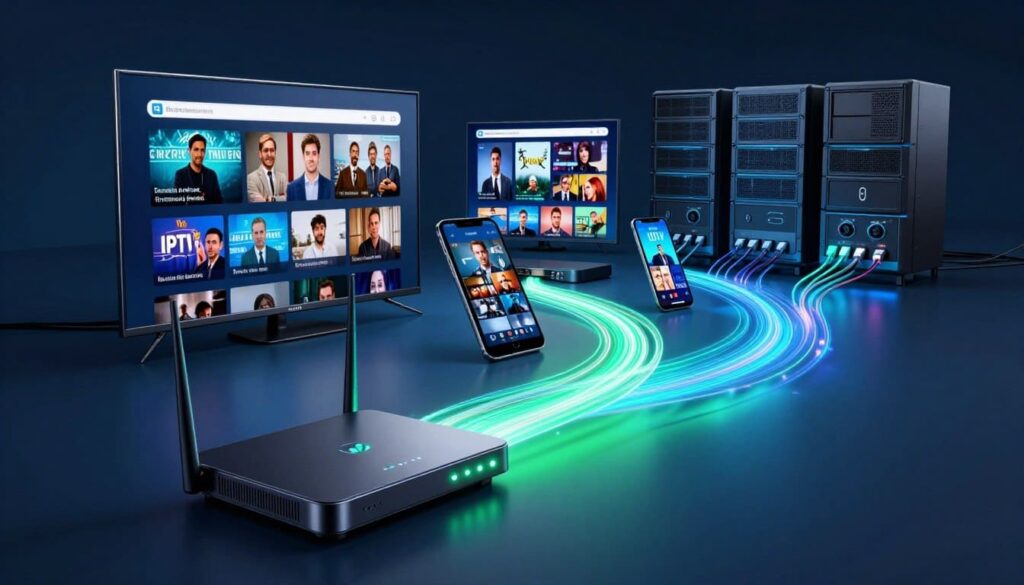
IPTV data transmission breaks down video into small packets. These packets are then sent over the internet to the viewer’s device.
The process includes several steps:
- Content preparation: Video is encoded into a digital format for streaming.
- Packetization: The encoded video is split into small packets.
- Transmission: These packets are sent over the internet to the viewer’s device.
- Reassembly: The packets are put back together into the original video. It is then decoded and played back.
Video Compression and Resolution Impact
Video compression and resolution are key to IPTV streaming quality. Video compression makes video files smaller for easier internet transmission. But too much compression can hurt video quality.
The video’s resolution also affects streaming quality. Higher resolutions, like 4K, need more bandwidth and processing. Lower resolutions might not be as good for watching.
It’s important to find the right balance between compression and resolution. This balance is key to getting the best IPTV streaming quality. Understanding these factors helps viewers appreciate the effort behind high-quality IPTV streaming.
Key Factors Affecting IPTV Streaming Performance
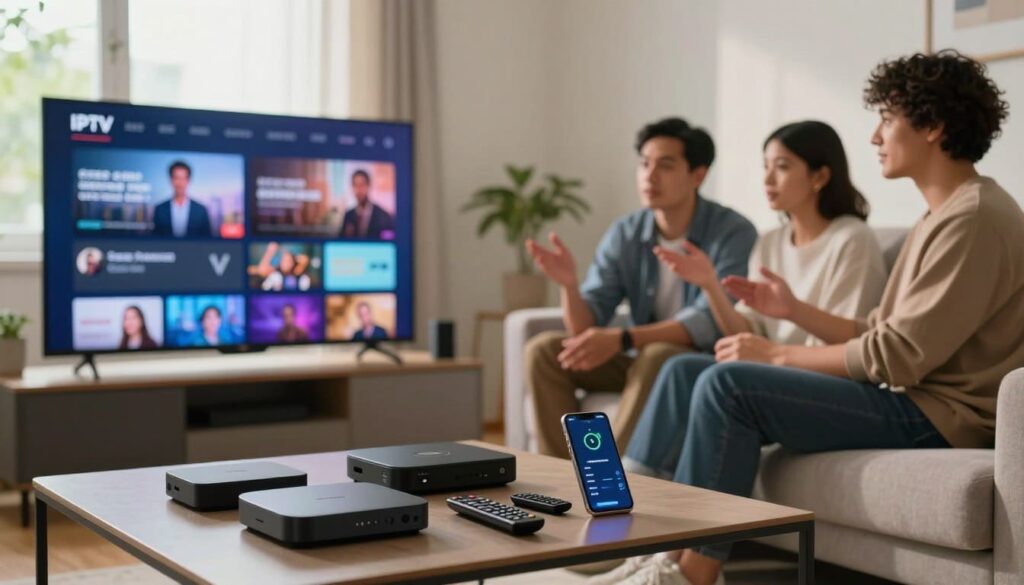
IPTV streaming quality depends on several key factors. You need a fast internet connection, a stable network, and the right devices. A well-set up home network also plays a big role.
Internet Connection Speed Requirements
The speed of your internet is very important for IPTV streaming performance. Different video qualities need different internet speeds to stream well.
Minimum Bandwidth for Different Resolutions
- Standard definition (SD): at least 3 Mbps
- High definition (HD): 8 Mbps
- 4K streaming: at least 25 Mbps
Upload vs. Download Speed Importance
Download speed is key for streaming. But upload speed matters too, if you’re streaming from your device. A good internet plan with enough download and upload speeds is vital for iptv stability.
Network Stability and Consistency
A stable network is essential for uninterrupted IPTV streaming. Issues like network congestion or outages can cause problems. Make sure your network is set up right and your router can handle the stream.
Device Processing Capabilities
The device you use to stream IPTV matters too. Devices with strong processing can handle high-quality streams better. Make sure your device can handle the stream you want to watch.
Home Network Setup and Configuration
Your home network setup affects your IPTV streaming. Wired connections are usually more stable than Wi-Fi. Also, setting up your router and IPTV device for the best performance is important for smooth iptv streaming.
Common IPTV Streaming Issues Explained
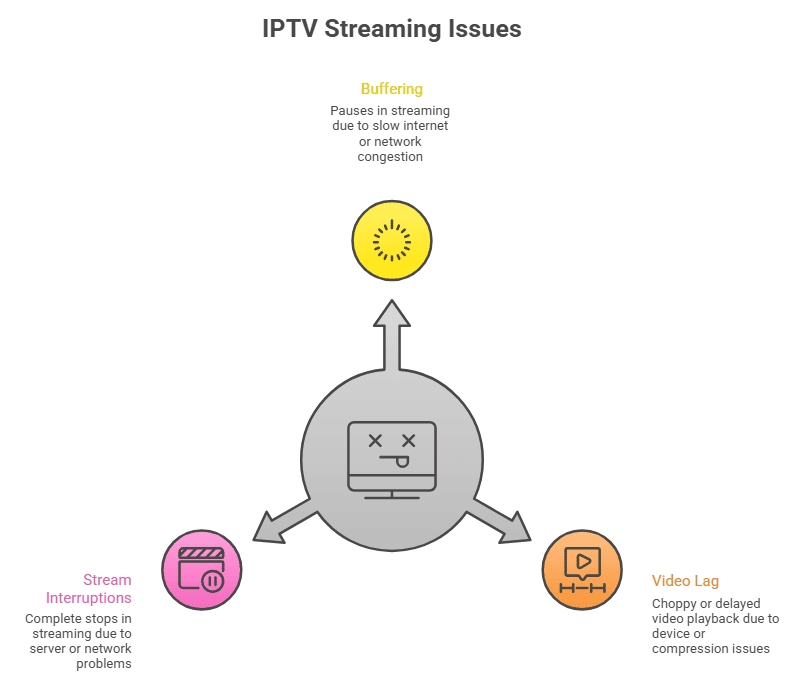
IPTV streaming has its perks but also faces common problems. These can mess up your viewing experience. Issues like buffering, video lag, and stream interruptions are common.
Buffering: Causes and Effects
Buffering is a big headache for IPTV users. It happens when the stream pauses to load more data. This is often due to insufficient internet bandwidth or network congestion.
Many things can cause buffering. A slow internet connection, a busy server, or network setup problems are some examples. Buffering can ruin your viewing experience and might make you stop using IPTV.
To fix buffering, you need to tackle its causes. This might mean getting a faster internet plan or tweaking your home network.
Video Lag and Frame Drops
Video lag and frame drops are other issues that can mess up your IPTV experience. These happen when the video stream doesn’t play smoothly. It looks choppy or delayed.
Several things can cause video lag and frame drops. It might be because your device can’t handle it, or because of video compression or resolution problems. To fix it, check your device’s specs and adjust video settings.
Stream Interruptions and Disconnections
Stream interruptions and disconnections are the worst IPTV issues. They completely stop your viewing. These problems can come from server-side issues or user-side issues.
IPTV providers need strong servers and reliable networks to avoid these problems. Users should also make sure their home network is stable and well-configured.
The Critical Role of Server Reliability in IPTV Streaming
The stability of IPTV streaming depends on the servers hosting the content. Reliable servers provide a smooth viewing experience. But, underperforming or overloaded servers can cause buffering, lag, and stream interruptions.
Server Performance Impact on Viewing Experience
Server performance greatly affects the quality of IPTV streaming. A high-performance server can handle more connections at once, reducing buffering and lag. On the other hand, a poorly performing server may struggle to keep a stable connection, leading to a bad viewing experience.
The quality of our IPTV service is directly related to the reliability of our servers. We invest heavily in ensuring our infrastructure can handle peak loads – IPTV Service Provider
Server performance is influenced by hardware, software optimization, and network connectivity. A well-optimized server can efficiently handle requests, ensuring streams are delivered quickly and reliably.
Peak Hours and Server Load Considerations
During peak hours, more users access IPTV services, increasing server load. A robust server infrastructure is essential to handle this increased load without performance issues.
| Server Load Factor | Impact on IPTV Streaming | Mitigation Strategy |
|---|---|---|
| Increased User Demand | Potential for Buffering and Lag | Load Balancing Across Multiple Servers |
| Server Hardware Capabilities | Affects Stream Quality and Stability | Regular Hardware Upgrades |
| Network Connectivity | Influences Stream Delivery Speed | High-Quality Network Infrastructure |
Choosing a Reliable IPTV Provider for Quality Streaming
Finding a good IPTV provider is key for a great streaming experience. There are many options, but picking one that offers smooth and high-quality streaming is important.
Essential Provider Quality Indicators
There are a few important things to look at when choosing an IPTV provider.
Server Infrastructure Assessment
The strength of a provider’s server setup is very important. A strong server network can handle lots of users without slowing down.
Customer Support Responsiveness
Good customer support is essential. It helps fix problems fast, so you can keep watching without interruptions. Look for providers that offer 24/7 support and many ways to get in touch.
Why bestiptvservice4k.com Delivers Consistent Streaming Quality
bestiptvservice4k.com is a top choice for IPTV. They offer great streaming quality thanks to their strong setup and focus on customer happiness.
Technical Infrastructure Advantages
bestiptvservice4k.com has a top-notch technical setup for streaming. Their modern servers and backup network mean you get smooth iptv streaming.
Quality Assurance Measures
bestiptvservice4k.com takes quality very seriously. They keep their servers in top shape and watch them closely to make sure you get the best iptv streaming quality.
| Provider | Server Infrastructure | Customer Support | Streaming Quality |
|---|---|---|---|
| bestiptvservice4k.com | Robust and Redundant | 24/7 Support | High Definition |
| Other Providers | Varies | Limited Hours | Varies |
Choosing a reliable IPTV provider like bestiptvservice4k.com means you get a top streaming experience with few problems.
Conclusion: Achieving the Best IPTV Streaming Quality
To get the best IPTV streaming quality, it’s important to know what affects it. Things like internet speed, network stability, device power, and server uptime play big roles. Understanding these can really improve your viewing experience.
Problems like buffering, video lag, and stream drops can be lessened by picking a good IPTV provider. bestiptvservice4k.com is known for its reliable streaming. Also, having a well-set up home network is key for top-notch streams.
By focusing on these important factors and making smart choices, you can have a smooth IPTV streaming experience. With a strong internet connection, the right devices, and a trustworthy IPTV service, you can enjoy your favorite shows without any issues.
FAQ
What is IPTV streaming quality, and why is it important?
IPTV streaming quality means how clear and smooth the video and audio are. It’s key because it makes watching more fun and real.
How does internet connection speed impact IPTV streaming quality?
Your internet speed really matters for IPTV quality. Faster speeds mean better quality, while slower speeds can cause problems like buffering.
What are the minimum bandwidth requirements for different IPTV streaming resolutions?
Bandwidth needs change with resolution. SD needs about 3 Mbps, HD needs 5–10 Mbps, and 4K needs 25 Mbps or more.
How does device processing capability affect IPTV streaming performance?
The power of your device affects how well it streams IPTV. More powerful devices can handle better quality and more complex tasks.
What causes buffering, lag, and stream interruptions during IPTV streaming?
These issues can be caused by insufficient bandwidth, unstable networks, device limitations, or overloaded servers.
How does server reliability impact IPTV streaming quality?
Reliable servers ensure smooth streaming. Poor or overloaded servers can cause buffering and interruptions.
What should I look for when choosing an IPTV provider to ensure quality streaming?
Look for strong server infrastructure, responsive customer support, and a good reputation.
How can I optimize my home network for better IPTV streaming quality?
Use a stable and fast internet connection, optimize your router settings, and use capable devices for IPTV streaming.